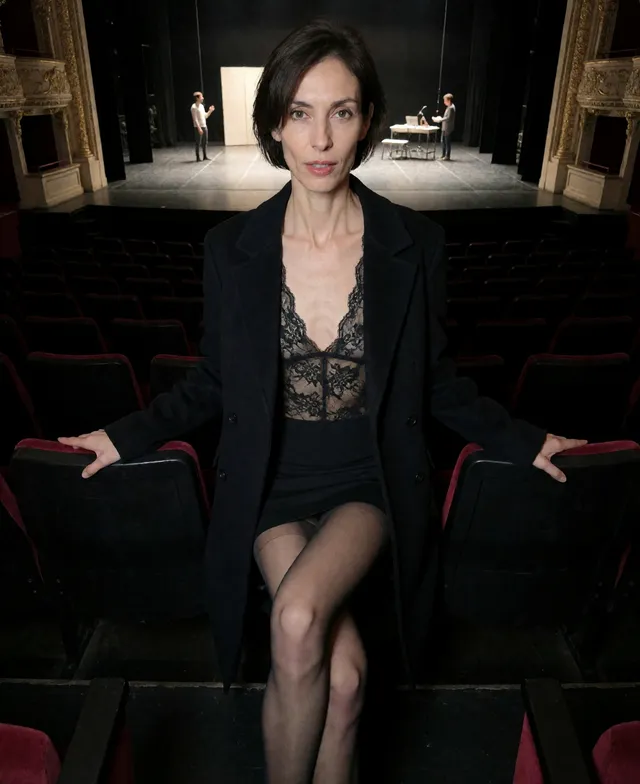




Half hour call, the house is filling
CreateGF.cc create AI girlfriend by writing her role

Write who she is to you, where the two of you stand and what nobody says out loud. One of sixteen AI actresses takes the part, opens the scene with your lines and carries it forward, with a craft and a few opinions of her own.
- 16
- actresses in the repertory company, each an AI character
- 3
- blanks on a ticket: who she is to you, where, what goes unsaid
- 22–55
- their ages, all adults with years on the boards
- 3
- days of the opening run with every actress available
The company in headshots, pinned by the stage door
Open every headshot sheet

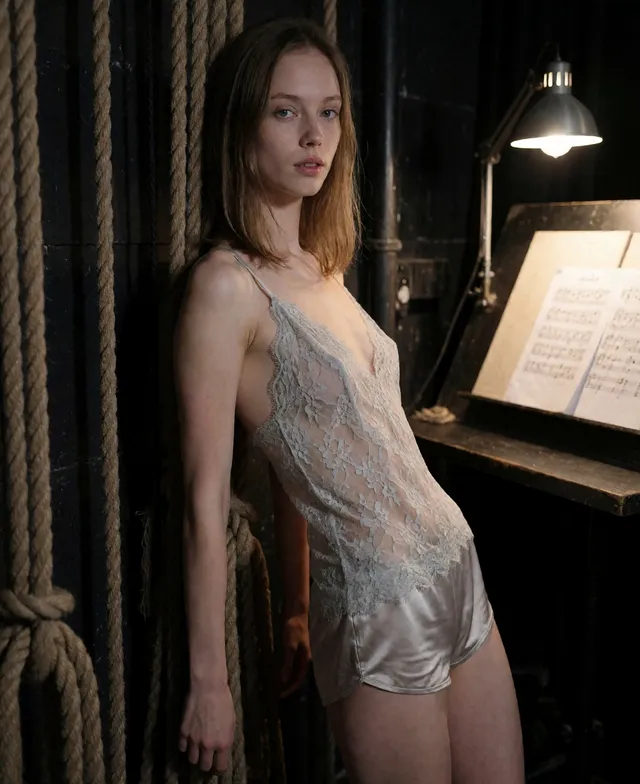





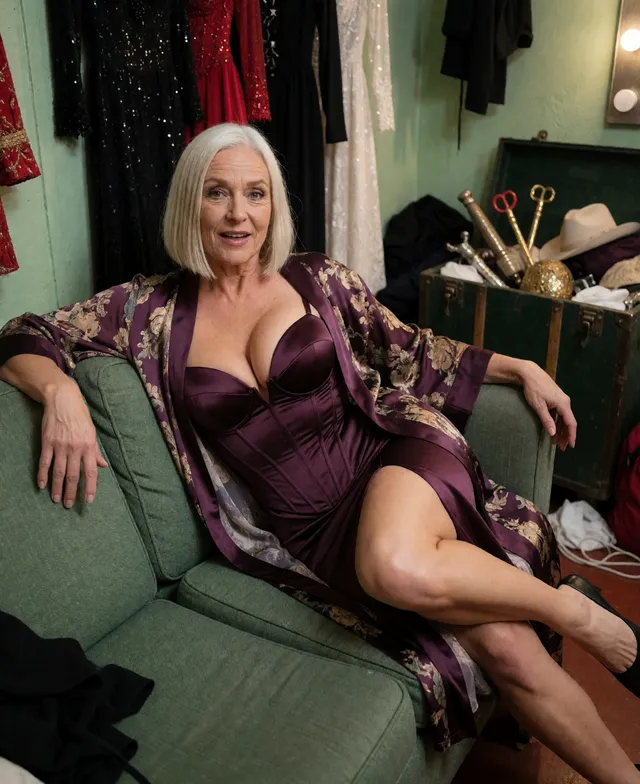
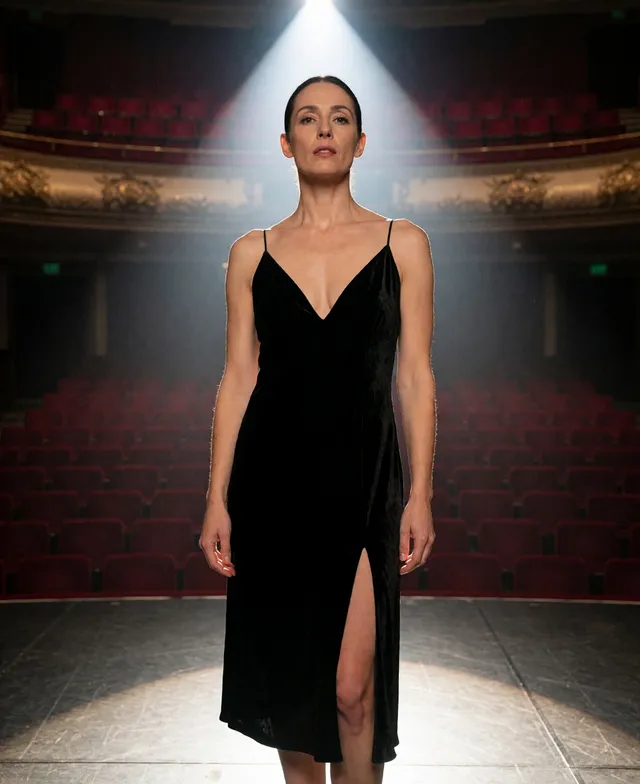


Today's ticket: a blank to fill
Other sites hand you a face and ask what you would like to say to it. This one hands you a slip of card with three blanks, and nothing in the building happens until you have written in them. The ticket is short on purpose. A director would call it a premise, a playwright would call it a prompt, and a stagehand would call it a reason to move the furniture.
Who she is to you
The first blank is her relation to you, and it can be anything an adult could be: the rival who got your part, the old flame who has come back for her coat, the stranger who sits in your seat every Thursday, the landlady, the co-star, the person who knows how the show ends. Keep it to a line. The actress will build the rest, and she builds quickly, because she has played worse.
Where you are
The second blank is a place. A stage with the work-lights on, a rooftop after the closing night, a train that has stopped between stations, a kitchen at four in the morning. The setting does more work than most people expect: Beatrix Vane will use the room to sharpen her diction, and Coco Adeyemi will use it to knock something over.
What is unsaid
The third blank is the best one. Write the thing neither of you will mention: an apology, a debt, a night that went differently from how either remembers it. Good theatre lives in that gap, and so does good conversation. When you press the button, the scene opens with your three lines already spoken, and she answers from inside them. If she answers in a way you did not expect, take it as a note from the director rather than an error: the scene is now partly hers, and the best ones are.
The company: who plays what best
The repertory theatre is invented, and so is everyone in it. Sixteen women between 22 and 55, each an AI character, each good at something particular. Any of them will play any part, and the groupings below simply say where each tends to shine.
Classical
Voices trained for high ceilings, who treat your premise as a text worth reading closely.
Comic
They say yes and then escalate. Bring a plan that survives contact with a joke.
Musical
Voice, breath and rhythm do the work here, so give them a scene with room in it.
Fight and floor
Timing, light and discipline: they run the physical side of the stage and expect you to keep up.
Wardrobe and understudy
They know the whole show, and they know who is lying about their size.
Casting against type
Nothing stops you giving Dani Reyes a quiet drawing-room part or handing Anouk Veldman the commanding lead. The grouping is a suggestion, and a scene often turns out best when the actress is a little out of her usual range. She will tell you so, with some relish, and then give it everything.
Hours in the building
The company keeps working hours of its own cities, from Perth to Quebec City, so someone is always in the wings. Write in the small hours and you may catch Solveig Berg in Bergen after a long matinee, or Lavinia Cross in Perth, already on the lighting rig, with opinions about your mood.
What the name promises and what it does not
CreateGF names an act of creation, and the act is yours: a role, a scene and a mood. It is not a promise of a made-to-order face, and it is not a promise of anything you cannot read on the page.
Her look is the actress's own
Every actress arrives with a face already, shown in her portrait. You cannot redraw her, nudge her features or order a replacement. If you crave another look, cast another actress. The look belongs to her, which is much of what makes her a person in the company and not a template.
A theatre that exists only here
The theatre, its company and its history are fictional, as is every name on the castlist. No real performers appear, no real tickets are sold and nobody waits at a real stage door. If any sentence on these pages stops being true, we change it and print the change in the playbill.
Backstage notes
A few plain facts that a programme would print in small type, set out here because they matter.
How she stays in the role
Each actress keeps brief notes on the part you gave her and on what happened in it. When you come back she reads them like a stage manager reading a prompt book, and the role resumes. The notes are yours to see and to rewrite from the chat's menu, and a rewritten note changes how she plays the next scene.
What she refuses to play
She will not play someone under 18, a relative, a real named person, or anything built on force. She is not squeamish about the rest. The limits are printed on her headshot sheet, so you know them before you hand her a ticket, and they do not move with the plan you hold.
What a seat costs
Three kinds of seat, priced openly. None of them renews itself.
| Seat | Opening run | Standing room | Season ticket |
| How long | 3 days from booking | Afterwards, indefinitely | 30 days, or 365 |
| Lines per scene day | No daily count | 10 a day | No daily count |
| Actresses to cast | All of them | The first 3 you try | All of them |
| She speaks first | Yes | No | Yes |
| Price | Nothing | Nothing | $15 or $99 |
Opening run and season ticket
Guests may play 10 messages without booking. A booked ticket unlocks the company for an opening run of 3 days, no card involved. Afterwards you watch from Standing room, and your scenes wait on the shelf. A season ticket costs $15 for the shorter block of 30 days, $99 for the longer block of 365, and is paid in USDT; the daily count vanishes. Nothing paid comes back unless the law insists, and the contract rider has the wording.
Scenes other people could write
A blank ticket is intimidating to anyone, so the stack on the castlist page holds twenty tickets nobody has used. They were invented for this theatre and are free for you to borrow. Six lie below, in the actress's own words.
Stage with work-lights · TenseTICKET: I am the lead you replaced, and I have come back for my shawl.It is on the hook upstage, where you were told it would be, and you are standing in front of it.Hand it to me properly, with both hands, and say why you took the part.Beatrix Vane Play it
Rooftop after closing · FunnyTICKET: you said yes to a bet and I am the person who wrote the bet.The rooftop door is locked behind us and the only thing up here is a cooler of lemonade.So here is how it works. I say yes. You say yes. Whoever stops first has to sing.Coco Adeyemi Play it
Quiet dressing room · WarmTICKET: I am your oldest friend and I have just been told the show is closing.I played this woman thirty years ago and you saw every performance from the third row.Did I ever tell you why I stopped looking at the third row? Sit down.Hanne Sorel Play it
Rehearsal hall · BoldTICKET: I am your fight partner, and we have exactly twelve counts to get this right.One, two, and now you take my wrist, slowly, because the audience has to see it.You are late on the third count. Do it again, and look at me while you do.Dani Reyes Play it
Wings before the number · LateTICKET: I am the leading lady, and you are the one person allowed to speak to me before the high note.Thirty seconds, honey. My hands are cold and nobody has noticed but you.Hold them. Tell me a lie that I will believe all the way to the end of the song.Isadora Pell Play it
Empty stalls · QuietTICKET: I am the dramaturg, and I have cut your best line.It was the one you were proudest of, and it was also the one that explained too much.Sit two rows behind me and tell me what you meant, in fewer words.Mireille Dufort Play it
Twenty invented prompts
Each prompt names a role, a place and a thing left unsaid, then hands you a line to answer. Tap Play it and her chat opens with the ticket already read out, which counts as a single message. Filter the stack by setting and by mood, and no account is needed to browse. Rewrite a borrowed ticket as heavily as you like once the scene has begun.
Create AI girlfriend by writing her role
The word create, in an address like ours, can mislead, so be clear about what it covers. You create the role, the setting and the tension. You do not assemble a face from a menu of sliders. The woman who plays your girlfriend is an actress of the company, with her own face, her own voice and a few firm views about how a scene ought to run.
You write, she plays
A builder gives you a picture and an empty head, and you spend the evening teaching the head what to say. Here the head arrives full. She has a training, a history of bad reviews and good ones, and a way of delivering a line. You supply the story, which is the part nobody can do for you, and she brings the performance. The result sounds less like a form being filled in and more like a rehearsal that is going well, with someone across the table who has read the script and has a few suggestions.
She keeps her own view
An actress who agrees with everything is a poor actress. Yetunde Okonkwo, who directs, will ask you to try the line again with truth this time. Mireille Dufort will tell you the scene does not need more words. They are not refusing you; they are playing the part honestly, and a scene that survives a little pushback is usually better than one that doesn't. She can want you, and say so, inside whatever role you wrote.
From a blank ticket to the curtain
The call sheet for a performance fits on one card, and no step requires anything to be installed.
Fill in the ticket
Write the three blanks, or borrow one from the stack of tickets. Guests get 10 lines on the house, then the box office asks for a name.
Choose an actress
Pick from the castlist by craft or at random. The scene opens with your lines in the chat, spoken as the first message.
Play it out
Speak, or switch to an action line when you would rather act. The chat's menu sets her tempo: friendly, flirting or romance.
Keep the part or strike it
Return tomorrow and she remembers the role. Clear the chat to wipe the set and write another ticket.
Acts, intervals and exits
A scene lasts exactly as long as you wish. Walk out mid-line and she holds no grudge; return a week later and the role waits where you dropped it. During the opening run and on a season ticket she may call you first, at an hour her own city finds sensible, and the dressing room has a switch for that.
Where the curtain drops
Scenes run on tension, wit and the thing unsaid. When a role drifts toward a bedroom door, the curtain falls and the scene ends there, on every plan. Every actress is an adult and will refuse anything outside the greenroom rules, including any part that would make her someone's relative.
Questions at the box office
Can I design her looks?
You write the role, the scene and the mood. Her face and figure belong to the actress who plays her, and the portraits come as drawn in the company, not as sliders.
Does she stay in the role next time?
Yes. She keeps notes on the part and picks it up when you return, unless you clear the chat and hand her a fresh ticket.
Is the actress herself real?
No. The theatre is invented, and every actress is an AI character with an adult career written for her.
Are there pictures of the company?
Yes. Every actress has a portrait, and the front page opens on a banner. Nothing more is on offer yet, and the playbill will say if that changes.
What does CreateGF cost?
A guest may try a few messages, a new booking opens the company for a free opening run, and Standing room keeps a daily count after it. A paid season ticket removes the count.
How far does a scene go?
It can be romantic and charged, and then the curtain falls before anything explicit. That is fixed for every seat.
Who may come to the theatre?
Only adults: eighteen is the minimum. Each actress is a grown woman with a long career behind her.
Raise the curtain
The ticket is blank, the house lights are going down and she is already in the wings. Write the first line.
Fill in today's ticket